
Lynette Lee
interviewed by terry bautista on February 20, 2009
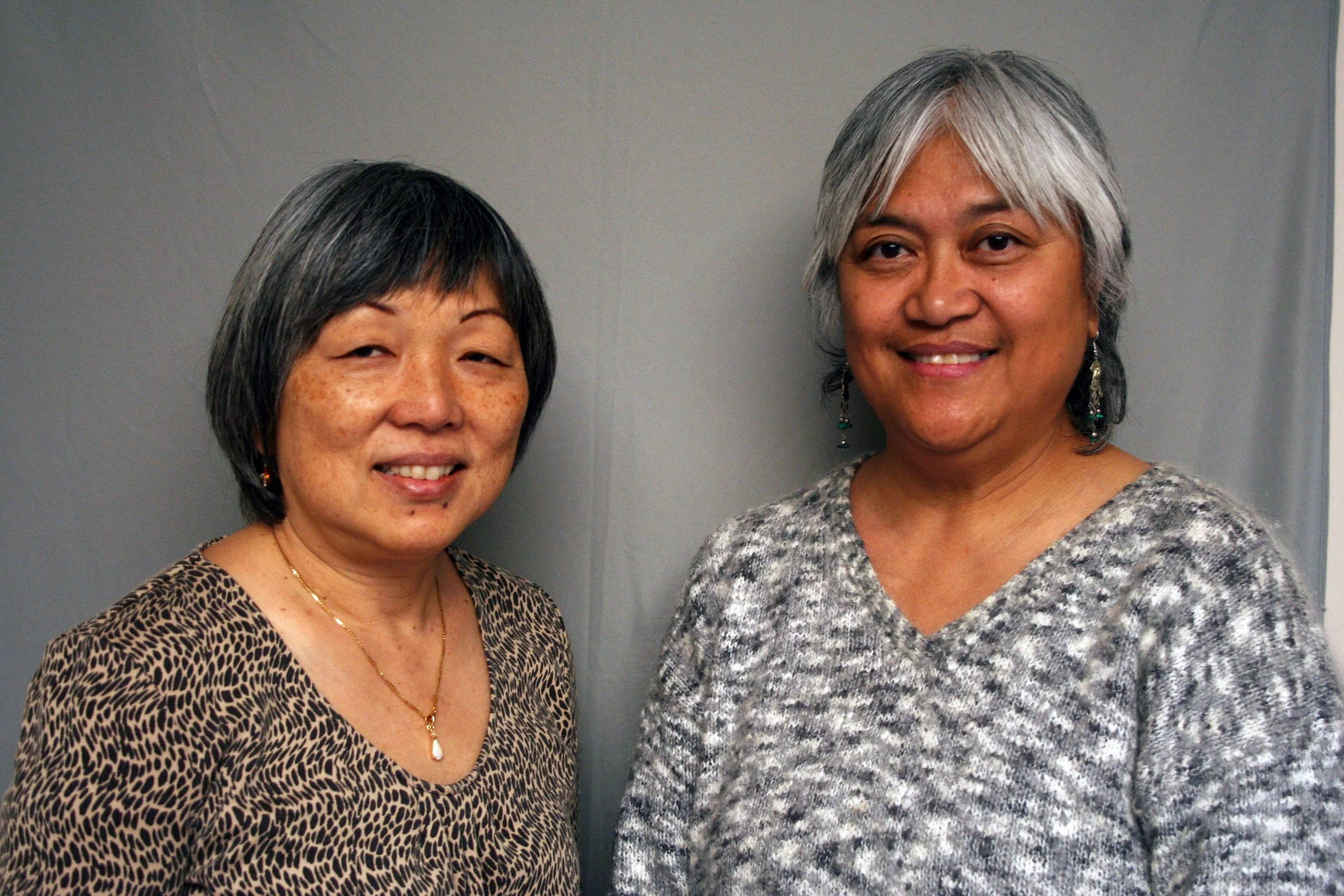
Lynette Lee and Terry Bautista are two long-time community leaders who reflect on their decades of work in Oakland’s Chinatown, particularly through the East Bay Local Development Corporation (EBALDC). In her interview, Lynette discusses the process of transforming an old, rundown warehouse into the Asian Resource Center, now a hub for nonprofits and small businesses.
Over the years, EBALDC has expanded its mission beyond Chinatown, partnering with diverse communities to build affordable housing across Oakland. Both women emphasize the importance of preserving Chinatown and partnering with diverse groups to build affordable housing across Oakland. The interview highlights the impact of grassroots efforts in shaping Chinatown into a vibrant, multi-ethnic community.
Access the transcript here
Interview Transcript
Terry: I'm Terry Bautista. I'm 62 and today is February 20, 2009 here at the Oakland Asian Cultural Center. And I'm here with Lynette Lee, an old friend and colleague in the East Bay Asian Consortium.
Lynette: I'm Lynette Lee and I'm 61. And today is February 20, 2009. And again, we're here at the Oakland Asian Cultural Center. And I'm sitting with Terry Bautista, who I've known for at least a couple of decades, if not more. And our kids had played together.
Terry: That's true. Lynette, you have been in Chinatown for more than two decades, actually. And the building where East Bay Asian Local Development Corporation, where you are now the director, was an old Beacons building?
Lynette: A storage building. It was Lions Moving.
Terry: Lions Moving, I see. And it has a beautiful exterior. It's an old Art Deco building.
Lynette: Yeah. Our architect who worked on the building, Jimmy Shimaro, called it Flamboyant French Gothic.
Terry: I see. It's very intricate, some of the different carvings. But it's a very notable building in Chinatown. It's kind of like considered the center, so to speak.
Lynette: Well, because we have a lot of nonprofits who provide a variety of services, as well as small businesses all in one building. It's known as the Asian Resource Center. So, especially immigrants, but other folks can come in and get a variety of services, as well as the best boba tea in the country, some declare.
Terry: Oh, wow. And boba tea is?
Lynette: Is that pearl milk tea with tapioca pearls? Terry: It's very popular now among young people. Lynette: And the sweetheart cafe has, I think, 126 variations of boba tea in a variety of flavors, including durian. Durian from the Philippines. Right, as well as you can also get Asian shaved ice there. Uh-huh. Something quite similar to Halo-Halo.
Terry: Halo-Halo, yeah, the dessert from the Philippines, too. So, you have been executive director for Ibalsi, which is the acronym for East Bay Asian Local Development Corporation. Going on, how many years now?
Lynette: I've been executive director since 1982, so almost 27 years.
Terry: Wow. So, tell us a... Lynette: I'm sorry, today is actually their EBALDC’s anniversary date. February 20th. Terry: It is. Oh, wow, congratulations. So, 1982 is when the building opened?
Lynette: The building was opened, actually, in early 81, but EBALC was incorporated in 1975. Terry: I see. Yeah. And so, what was the building like before it became this multi-Asian, multi-service center?
Lynette: The building was an old, pretty much vacant and rundown warehouse that for many years was the lion moving and storage building, and it housed everything from cars to other kinds of goods. And when Ibalsi acquired it, it needed a lot of work. And over time, Ibalsi raised funds to do a gut rehab and change it into a multi-service center. That today is home to about nine non-profit agencies, and I think about eight small businesses.
Terry: So, it took crews of students, from what I understand, and young people, to help get this or demolish the interior.
Lynette: There were actually beautiful redwood shelves that were in the different floors, and actually volunteers from Chinatown Community Development Corporation came in and took down all the redwood and used it in their rehab projects in San Francisco. Because the rehab was so big, we had to hire a general contractor who did the rehab of the Asian Resource Center.
Terry: So, you recycled some of the things that were there, which is really good, because now recycling is so much a way of doing things now. To really preserve and use things in other projects.
Lynette: And maybe, yes, it is. And just to, for the record, give the original story of the building. The building was originally built by an inventor who invented code machines, and he expected that he would be getting shortly a big contract with the Department of Defense. And so, he had this building built, which was going to be a factory in 1926. It was completed, I believe, in 1927. But a factory for as many as 1100 workers to make these code machines. And he actually had his own residence built into the building. Unfortunately, he didn't get the contract. He should have waited until he got the contract.
Terry: So, he was living in a huge building.
Lynette: Yeah, and he eventually had to sell the building. And it changed hands over the years until it became, was owned for a while by Lion Moving and Storage. And then, Ebalty was able to purchase it and make it into the Asian Resource Center.
Terry: What was the challenge? You had to hire a general contractor, so that was getting someone who knew what to do. But what were the challenges from that point forward?
Lynette: Well, I think, you know, EBALDC, when it first started, was really a group of eager and passionate young folks. Many of whom were still students at UC Berkeley, as well as community people who had this dream of taking this old warehouse and making it into a one-stop service center for the Asian community. But no one had experience in development. And so, it was a trial and error process that raising the money took four years. And then, during the gut rehab and the construction took another two years. And then, as we were going through that, we realized we needed more money to finish the third floor, so we had to go out and raise more money. So, all in all, it really was a process, I think, that took about eight years to fully complete the building and fully lease it. And I'm happy to say that, since it's been opened, the Asian Resource Center has really been a steady home for many nonprofits. And some actually got so big that they needed more space and there was no more space to give them, because the building was full. So, they actually moved out and bought their own buildings. And that's true of Oakland Chinese Community Console, which later became Family Bridges, as well as Asian Health Services. But we also have a number of tenants, nonprofit agencies, who've been with us since the beginning, such as Asian Community Mental Health Services and FAA, Filipinos for Affirmative Action.
Terry: Yes, I know that the building has served as an anchor for a lot of nonprofit organizations that are almost as old as EBALDC and have celebrated 30-plus years of being able to serve the community and their different patients and clients. And so, I do recall also that tenants, many times, if EBALDC is doing well, they get a rebate of some type. Could you talk about that a little bit?
Lynette: Sure. For many years, this project was EBALDC's one and only project. And so, as a nonprofit, we have to be careful of what's called unrelated business income. So, the market rents that we got from the for-profit tenants, the small businesses, if we had to be calculated in a certain way. And according to the formula, some of the money we either had to give away or we had to pay taxes on the entire amount. And so, our board chose to give that money away from time to time, mostly back to the nonprofit tenants as a rent rebate. And then, they kept back about another 25% for supporting other programs in the community, such as youth programs. At one time, we made a donation to the Asian Community Library. Since that time, EBALDC has expanded into doing a lot of affordable housing. So, the revenue that we get from the Asian Resource Center doesn't count as much overall. But what we've done to help really make sure that this continues to be a home for our nonprofit tenants is we've frozen the rents for the nonprofit tenants. And it's been frozen for about 15 years. And that includes all the utilities, which is nice, and their janitorial services. And then, occasionally, we do share back some of the building surplus with the tenants. So, at the end of the year, sometimes they get a nice rent rebate check.
Terry: So, that sounds like it is an anchor and a foundation for a lot of service providers and advocacy groups, too. Because I do know that, as you said, Ibalzi in the beginning were these idealistic students who thought, well, we'll just volunteer our time. And many of those organizations that are still housed in the building on Athon Harrison still continue to remind the community that it's advocacy and services. You have expanded. I was able to join you in your last annual dinner. And what always impressed me about EBALDC was that the people who came to the annual events, it was a very multiethnic, multiracial mix of business and nonprofits and community-based groups. So, EBALDC, to me, is a good model for the city of Oakland in terms of integrating business and nonprofit and across community and ethnic lines.
Lynette: Oh, thanks. I think one of the challenges we had as we wanted to do affordable housing in the Chinatown neighborhood, which is where we started, is that land is very expensive in this neighborhood. And we're fortunate to be able to do one project that the city gave us quite a bit of money for. But we realized that the incoming Asian populations, especially the Southeast Asians and Filipinos and others, were not settling in Chinatown because there wasn't any room. So they were moving into West Oakland and East Oakland. And so we made a conscious decision to follow them and to build housing there. But we also were very sensitive to the fact that there were many long-standing communities who were already in those neighborhoods, such as African American and Latino residents. And so what we sought to do is we built housing in West Oakland and East Oakland was to create partnerships with local community groups and make decisions together as to what was going to get built and to share some of the work, as well as share some of the fees. And I think that's worked well for us over the years in that it's enabled us to do a lot more building in a collaborative way. And in the end, I think we end up serving the Asian community much greater than if we had just stuck to serving one ethnic population. And what we do see about our buildings is that generally they reflect the neighborhood. So in buildings in West Oakland, it may be primarily African American tenants. In Chinatown, it may be primarily Asian. In East Oakland, where it's very diverse, it's very diverse tenant population. But in every building, there's a mixture. And what that has done over time is also change board seats so that both our staff and our board is very diverse. In fact, we have as many African American as Asian board members. And I think it is, I think it's really part of the spirit of Oakland that we're a very diverse community on a block by block place. And it's really a joy to see how everybody interacts and shares their culture and history.
Terry: So in Oakland Chinatown, you've seen it change and you've seen influx especially of Southeast Asian and other Asian groups. The Pan Asian network is very broad with more than a dozen language groups. Are there places in Chinatown that you feel like are favorite places or kind of talk about the... the Chinatown that you have to come to work to every day?
Lynette: Well, I think the special thing about Oakland Chinatown is that it's really a local and a community Chinatown. And that, whereas San Francisco, which is much more well known, is much more tourist-oriented. And I think that this Chinatown has really stayed very local, although there are people who come to it regionally, and that it's a small enough community that a lot of people know each other and the history goes back really quite a long time to over a hundred years. And one of the things that, one of the ideas that's already, that's been kicked around a number of times was to create historic and cultural markers along the streets and in front of buildings that are significant, so that the stories or the history of what was there before or what is there now don't get lost. And it'd be nice, it'd be great to see it happen someday.
Terry: There's an oral history project right here in this building, and there is a way for people to talk about, you know, a place that they remember. Going back as a student, was there a place that you remember in particular when you were first working in Chinatown?
Lynette: I actually came later. Oh, okay. So I actually came to Oakland Chinatown in 71’ when I had just gotten my teaching credential from SF State and was hired by a youth group here in Oakland Chinatown and we created an alternative school in the building right across from the Asian Resource Center. Terry: They still have Chinese classes and ESL classes, yes? Lynette: They may, yeah. That building is owned by CACA, Chinese American Citizens Alliance, and we used to run the classes in the top two floors for immigrant kids and gang kids who went to Oakland Tech for half the day and they came to us for half the day for ESL and citizenship classes.
Terry: Was this an arrangement with the Oakland Public Schools? Lynette: Yes, yes, with the principal. And also Oakland Adult Ed. And so we actually, the youth group called East Bay Asians for Community Action was able to run, yeah, was able to run the program pretty independently. Lynette: That was an interesting model. They should have more of that kind of collaboration. Maybe they keep kids in classes more.
Lynette: Yeah, yeah. And I think a really interesting thing about EBCA, which had primarily high school and college students who were doing all these programs. I was the oldest person at, what, 22 in the program, or who was involved with EBCA, but a really great thing is from those roots a lot of people stayed in community work. So, for example, Wilfred Lim went to the Office of Civil Rights. Serena Chin ran a TV program for a wall called Asians Now and is now working with the American Lung Association. Greg Mark started programs for youth.
Terry: And he's now in Asian American Studies, right? Lynette: Right. And he runs programs both in Hawaii and here in California. So, a lot of people who came through that program are still doing community work or social justice work in one way or another. Terry: So what about the current leadership now? There's an active Chamber of Commerce, and there's also the East Bay Asian Consortium. So, can you talk a little bit about the kind of networking and inner action that some of the organizations in Chinatown are taking in terms of doing joint work or joint activities?
Lynette: Yeah. Certainly, I think the Asian groups in the East Bay have a great history of collaboration. Starting with the Asian Resource Center, in which a number of groups were already housed in the building, it was easy to form the East Bay Asian Consortium and have meetings once a month in which everybody could share what was going on with their organizations. They could advocate together on key issues and just really develop deep relationships. A lot of sharing went on in the women's bathroom, I would say. So, and through that, I'm sorry, I lost track of the question.
Terry: Well, the question of how the other groups, there's a Chinese Chamber of Commerce and a business network here.
Lynette: Yeah. And so, the Chamber of Commerce has also been around for quite a long time. They're doing an interesting partnership with Asian Health Services around traffic and pedestrian safety. And this was triggered by one of the elderly patients at Asian Health Services getting killed as he tried to cross the street after receiving services. And because there are too many cars that move too fast through Chinatowns, one-way streets to get to other places, either to the freeway, to Alameda, or downtown Oakland. And we have a lot of seniors here in Chinatown. Asian Health Services and the Chamber thought it was really important to make this a huge issue and to put in some safety measures. And so, they've been able to put in the scrambling system at major intersections that allow more time for pedestrians to cross the street and to really be involved with both the city of Oakland and the city of Alameda to find ways to calm the traffic in the neighborhood.
Terry: Well, it is very busy here. I do remember, I guess we did a collaboration when I was pregnant with my second daughter. And I helped with some of the downtown development planning with the group that was working with the mayor's office. And I do remember that there was a consultant who said that Chinatown had the highest per capita for a particular neighborhood in Oakland, that it was always a very enterprising place given the number of residents within a particular neighborhood. So, I do know that Chinatown is seen as quite a gem in the city of Oakland. And maybe you could talk a little bit about some of the economic development here.
Lynette: Sure. You know, this Chinatown is actually over 100 years old and it's the eighth site for Chinatown. The earlier Chinatowns were much more short-lived and some of them were destroyed due to the racism that was in place in the 1800s. And Chinatown also had to be moved to make way for the new city hall for Oakland. But this Chinatown has a lot of history and especially immigrants who were working on the railroad when the railroad was completed, many people ended up here in the East Bay and in Oakland Chinatown. I forgot my train of thought in your question again.
Terry: The thing about economic development, you said this is the eighth reincarnation, I guess, of Chinatown.
Lynette: Yeah. And so over time, this Chinatown really became a place where families could settle because actually Chinese were not allowed to buy outside of the area. And so it became quite insular. There was a system created of a lottery system that was spread throughout Oakland through grocery store networks where lottery tickets were sold at different grocery stores and that helped to support some of what was happening here in Chinatown. And Chinatown did have its ups and downs, but it got a boost in terms of population as well as economic support when in 1965 JFK, I said no, it wasn't JFK. Lyndon Johnson probably. Under Johnson lifted many of the restrictions in terms of immigration from Asia and more families and more immigrants were able to come in. And that created more people seeking to be here as well as entrepreneurs who looked to start businesses that could support a growing immigrant population. What was...
Terry: In terms of this building, do you remember what was here before?
Lynette: In this building, there actually were houses and small businesses here originally. Many of those were torn down because of urban renewal efforts and stayed vacant for a while. And then the city formed a project area committee that included many leaders and residents of Chinatown as well as small business owners to help develop a plan for what could be built here. And so the city chose a developer from Hong Kong to build a mixed-use development that then the citizens through the project area committee gave input as to what community needs should be included. So the idea for the Oakland Asian Cultural Center, for the library, for some affordable housing as well as ensuring some spaces for local small businesses really became part of that plan.
Terry: So how did East Bay Municipal Utility District become a... It's a big tenant on this particular block, right? Yeah. Was that something that was required?
Lynette: I think East Bay, as it's known, was in need of a headquarters. And so, of course, they're a large institution and they really persuaded the city to let them be part of the block. It wasn't part of the original plan. Terry: I see. Lynette: And the Chinese community said that they wanted to have some recognition of the Chinese contribution to the East Bay water system. And as a result, the committee was formed to create a special exhibit on the second floor in the Edmund Building. I remember because Alan Yee and I were both part of that committee to recognize the Chinese workers who often had to do very dangerous parts of creating the water system. So they were involved in some of the dynamiting to get the tunnels through. They had to hold the horses that were used to stamp the mud down for parts of it. And I really hope that folks go and take a look at the second floor.
Terry: So it's a permanent exhibit? It is a permanent exhibit. We should have some broadcasting to especially... not Chinese, but students who have Asian descent. And there are some schools and Oakland Public Schools that have more Asian population than others. But it's a good thing because we all depend on the water company. And how did we know... We wouldn't have known unless there's a way to kind of share the history. I guess that's another thing is that there's this preservation theme too that I think because of the agency that you've built over the years and worked with, what is your vision for Chinatown in terms of preservation?
Lynette: So I think I've had a chance to see Chinatowns in other cities. And sometimes the Chinatowns... because there is so much emphasis on economic development or because they're next door to downtowns. And then get eaten up by a growing downtown that a lot of the elements of a complete community get lost. So I've seen in Sacramento and LA a lot of the housing gets lost and the residents get moved out. And so what stays behind are primarily the small businesses and commercial enterprises. But to have a complete community, you need good, strong, growing small businesses. You need neighborhood institutions like churches and schools. And you need residents. And so... And opportunities for people to get together as a community, whether in social halls or meeting rooms. And so I think part of our concern with Chinatown is to help maintain and continue to foster the sense of Chinatown as a complete community.
Terry: Well, I thank you for being available today because there's a lot about Oakland Chinatown that even the young kids I saw yesterday who were here for Lunar New Year, they need to know that people like ourselves have been here for a while and that we actually made history.
Lynette: Yes, yeah. And there's still more to be made, right?