
Gregory Yee MArk
interviewed by Roy chan on september 6, 2021
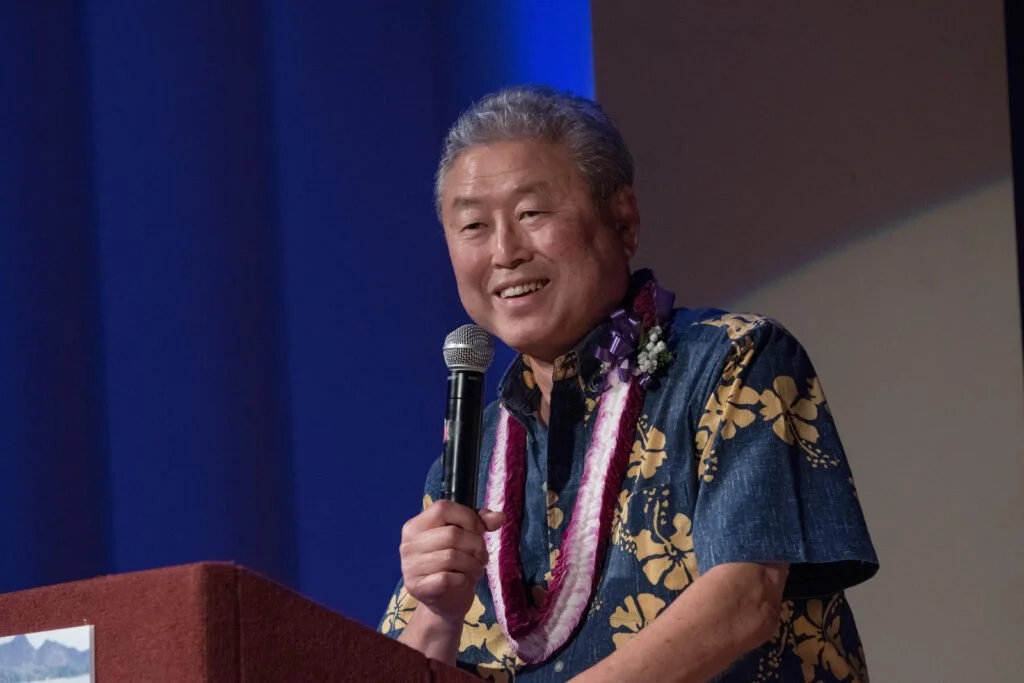
Fifth-generation Chinese American Gregory Yee Mark delves into his family immigration history, growing up in a community with a gang presence, becoming politically involved at Merritt College and later Berkeley, and fostering cross-racial solidarity on campus. He recalls attending school at the same time as other student activists, such as Bobby Seale and Huey Newton. Greg also reflects on the impact of illicit affairs—like gambling and the presence of the Suey Sing tong—on the development of Oakland. Greg is joined by his two children, who also reflect on their family history and experiences growing up in a changing community.
Access the transcript here
Interview Transcript
Roy: Good. So basically, Greg, we're just going to get you on tape here. So I guess I wanted to break up the interview into two parts. The first part is more about your family background, who immigrated here first, where your sister is from, and then sort of just about your ancestors and your ancestors' roots here in Chinatown because I know you have quite a history. And then talk about you personally.
Greg: Okay. That’s fine. And you grow out there.
Roy: That's fine. Does that sound good? Okay. Good. Close the door. Yeah, we should probably close the door in the end then. When your kids come, well, you've got to cut out with that.
Greg: Yeah, just told them that they could knock the door out. All right. Okay,
Roy. So today is the 25th. August 2012. And what is your full name?
Greg: My given name when I was born is Gregory Albert Mark. But professionally, I use Gregory Yee Mark. And occasionally, I use Gregory Albert Yee Mark. So kind of complicated.
Roy: And Mark is sort of the family name.
Greg: Mark and Cantonese would be Mark. Okay. So when my dad immigrated in 1928, the Angel Island immigration officer said, you know, Mark sounds like M-A-R-K. And that's how we got the name. I use Yee professionally because Mark's a paper name. So I'm really a Yee.
Roy: Oh, so Mark is a paper name.
Greg: Albert is my grandfather. So that's why there's really kind of historical significance to kind of each part of my name too, as well.
Roy: So was your father the first one to immigrate here?
Greg: No. On my, yeah, on his side, he's the first one. But my mom's side has a long, long history here.
Roy: What, so tell me a little bit about sort of, both, let's start with your mother since she goes back pretty far back. Where her ancestors were in China and sort of how that, the history of that.
Greg: My great grandfather, I'm not sure when he came, but most likely it was in the 1860s. Could have been the early 1870s from Hoi Bei. So that's our maternal, you know, village area. And my great grandmother was born in San Francisco, Chinatown in 1870. So she was one of the first Chinese American women born in the United States in the 1870. And her name is Chinn See.
Roy: How do you spell that? Roughly.
Greg: C-H-I-N-N-S-E-E. And I don't know what her surname was, you know, because, but that was the warm side of W-O-N-G. So my grandfather, Albert, was born in 1892.
Roy: Oh, your grandfather's name is Albert as well. Just like your father's name is Albert.
Greg: No, my father's name is, well, Yiquan Wang. Oh. That's right. But then it gets complicated again, but one of my aunts, my mother's older sister, thought my father was very handsome. And so named him, gave him the English name Byron after Lord Byron, the British poet.
Roy: Oh, wow. So let's get back to your maternal ancestral roots. So your great grandmother was born in 1870.
Greg: 1870.
Roy: I mean, I'm sorry, 1870. And then, so again, who, could you tell me again who came from Huy Ping first?
Greg: So her husband. Her husband got it. My great grandfather, Jim Sing, came from Hoi Ping. And they were married in 1884 when she was fourteen, and he was, I think, thirty-nine, forty years old.
Roy: So they met here. They met here. Yeah. And Jim See was a China boss man, timbering, ready. Wow.
Greg: Yeah. And so he did a lot of negotiations, so established kind of close contacts with the European Americans in Reading, especially in the timber industry, and actually helped to protect the Chinese in that area in terms of the anti-Chinese movement. And so kind of, he was a fascinating person too.
Roy: Have you done research on him? No, I haven't. That would be fascinating to learn more about him. Yeah. So, and all of this information, was it just passed down? How did you make it?
Greg: Passed down. I have a distant cousin who's done some research. I have some birth certificates and other documents too.
Roy: You went to NARA? Yeah.
Greg: Some of it, my aunt Stella, who is one of the founders of the Chinese Historical Society in San Francisco, was able to gather some things. And her husband was Kim Lee, who was the San Francisco Chinatown photographer for over 40 years. And his collection of photographs now belong to the Berkeley Asian American Studies Library. Yeah, it gets all over.
Roy: There's kind of deepness in the many areas. To expand. So, you're, so you're, so Chin Lee met Jim See in San Francisco.
Greg: I would imagine San Francisco. I would imagine it was some type of arranged marriage. Quite a, you know, she was very young, 14, and you know, he was 39, 40 years old.
Roy: So, then they had your grandparent.
Greg: And then they had five daughters and one son. The son died at, but when he was a month old. And my aunt Stella was born in 1913. So this would make her 99 years old. She passed away in 2002. But she became, in her own right, a poet, you know, a fairly well-known poet and artist. She did watercolors, especially a San Francisco Chinatown. So she has a whole collection.
Also, probably something significant. Her mother is Violet. And my great-grandparents took Albert, my grandfather, and his younger sister, Marion, to San Francisco, I mean, from San Francisco to China. So they arrived in 1911 during the midst of the Revolution. And then my grandfather was introduced to my grandmother, Violet, and they were married. And so grandmother came over in 1912 with the rest of the family. And because of Jim See’s close connections with kind of, some of California's emerging, you know, leadership, my grandmother was able to bypass Angel Island, too, as well. And in 1915, 1916, Aunt Marion, Albert's younger sister, decided to take on a project. And that was titled The Curse of Guangdong, and it was the first Asian-American film.
So they did that, and it's now getting close to 96, 97 years ago. And where was that filmed? In Oakland and in Niles Valley in Fremont. So here in Oakland.
Roy: Do you have any idea where in Oakland?
Greg: Yeah, it was probably in my—we called her Dai-Goo-Ma, oldest aunt, probably in her place. Her husband was a Chinatown merchant here in Oakland Chinatown.
Roy: Do you have any sense why and how they—why did he even decide to do this and then film the backstory?
Greg: Marion—my great-grandparents had a restaurant here in Oakland in kind of an earlier Chinatown, you know, the one in San Pablo, more going towards north. And they owned a restaurant, and Aunt Marion worked in the restaurant. You know, she was an American born Chinese, 1895. So she was about 18, 19 years old, and this is the speculation. But we heard, and I verified it, that Charlie Chaplin was in the area. And so we heard that his crew would come into the restaurant.
And so when you think about it, how could a young 19-year-old Asian-American woman take on the idea to do a film? And it was very different to cameras where, here in hell, they were, you know, they took up half the size of this room at that time period. Where do you get the equipment?
Roy: Where do you get the people who could be behind the cameras?
Greg: So it was her idea. She raised the money through the extended family. Dai-goo-ma did the costumes, was good with hair, and everyone pitched in. My grandmother was a star of the film, focused on her. And we have the first Asian-American film that came out in 1916. And it's on the National Registry, you know. And so it premiered here in Oakland in 2007, because it was a financial failure in terms of, you know, World War I, the U.S. got involved around that time period. So it wasn't a good time to have a film come out. Wow.
Roy: Yeah, I was at that premiere at Grand Lake. Is it at Grand Lake?
Greg: No, it premiered at the Oakland Museum. But we did another showing at the Grand Lake. And it was combined a little bit with Arthur D'Arm, and some of his work with Hollywood Chinese. So that was probably like about the fifth showing. Because a week after the Oakland Museum, we were in Hollywood, and the Ocean Picture Academy had a premiere, too. So we did the whole red carpet stuff.
Roy: Wow. Do you have absolutely any, I don't know, because this is pretty far back, but images of San Pablo Chinatown or anything? I'm sure they do.
Greg: No, I don't have any. But this afternoon, we're going to hit the scrapbooks with my two of my aunts, who are in their 80s. And I'll let you know.
Roy: Okay, I’d love that.
Greg: I've seen these scrapbooks, but then I haven't looked for pointed things. And we're doing a major showing of Cursa Guam, Bowen, at Sac State, on October 22nd. And so my two aunts in El Cerrito, my aunt in Del Mar, is flying up. And then my daughter will be in, so there'll be like three generations of us looking at the first and second generation. Because in the film, there's three generations of women in my family, the two.
So it really spans five generations. So if you guys have time on Monday, October 22nd, it'll be a major showing.
Roy: Wow.
Greg: We expect about 800 people. And it might be the only time that we have all of us on stage. Wow. And it will be looking at photographs. It'll be probably PowerPoint. And then my aunts and my, will reflect on it and interact with my 13-year-old daughter, who will be here in a couple of minutes.
Roy: Amazing. Yeah. And then you're, tell me a little about your mother.
Greg: My mother was Violet's third child, born in 1919, and her name's Clara. And she passed away at age 42 in 1961. So it's been over 50 years since she passed. So she was a Chinese American woman, went to Oakland Tech, fascinated with movies, and named me after Gregory Peck.
Roy: That is, wow…and so did she grow up, where did she grow up?
Greg: In Oakland.
Roy: Oakland Chinatown or nearby?
Greg: Nearby.
Roy: Interesting. And so let's go back to your father. So your father came in 1928 as a paper son.
Greg: Right. 1928, immediately the only job you can get after Angel Island, he was in Angel Island for two months, and then was in Chinese laundry work. It's interesting, my dad passed away in 1986, but I was able to bring him to Angel Island in 1979, before it became what it is today.
And we were able to gain access, go inside. And I brought a couple other men, and one of them is my good friend, Wilton's father, who just passed away recently. Homer Lee, and Homer was very involved here in Oakland Chinatown, was a son of everybody else. Lee's floor was on University Avenue in Berkeley, but I was able to bring him to Angel Island in 1979. And my dad remembered still the poem that was at the foot of his bunk, still 50 years later.
And so that was quite a moment, I remember, in Angel Island. And so my dad worked here in Oakland, in the laundry industry, became involved in different Chinese societies. Later on, he became president of the Suey Sing Tong on 8th Street. He was involved in San Francisco Chinatown societies, both San Francisco and Oakland, the Chinese laundry association.
Because we're Yees, he was involved with the Yeefeng Toi Gong Sao. So multiple types of organizations. And his network, of course, really paid off in 1936. And over at the Hall of Pioneers, there's a, they're honoring about eight or ten pioneers in Oakland Chinatown.
He's one of them. And that's because in 1936, he was arrested here in Oakland. And the crime my dad committed was that he was sweeping the floor of his laundry. And it was a stakeout. And they arrested him two minutes after six because he worked more than ten hours. And there were other laundry men that were arrested that weekend, 28. And my dad and his employee, Wong Wei, were the only ones who pleaded not guilty. And so my dad fought it all the way up to the California State Supreme Court. And he won.
And kind of the legal basis was the violation of the writ of habeus corpus. I think I sent you the article about that. And so, but he never told me about it until just a few years before he died. That we were walking on Broadway and he points to City Hall, you know, we’re right at—then from this 14th and Broadway. And he said to me in Chinese, well, “<Cantonese>, So I was in jail there.” And so, Mayor Kwan's arranging for me some time to go up and see the old jail.
And I know this is the only time I'll have access as well, she's mayor. I was trying to do it yesterday, but I couldn't get here in time. I didn't get to Oakland until about ten something, you know, but that's something I want to do.
I want to see what the old jail looks like. And during the time my dad was incarcerated, that was when in visitations with my mother and my aunt, that's when my aunt Stella gave him the name Byron. Otherwise, but of course in the Chinese community it was Yeeguang.
Roy: Wow. So your father is from, really from Huiping?
Greg: Toi San. My grandfather, Albert's family, you know, that's Huiping. On your mother's side? My mother's side. My dad was, you know, Seyup, you know, Toi San.
Roy: I see. Lung Wan is the name of the village. Oh.
Greg: L-U-N-G-W-A-N.
Greg's child 1: Where was the laundry business? Is it still in Chinatown?
No, on Fruitdale.
Greg's child 1: Oh, Fruitvale.
Roy: Fruitdale? Yeah. Oh, really?
Greg's child 1: Fruitvale, okay.
Greg: Yeah. I have the address. I mean, I wrote an article about it, so it's all in the article.
Roy: Yeah. Wow. Hmm. And how did your parents meet?
Greg: You know, I'm not really sure. I'm not sure. But I'll ask my aunties this afternoon. But from what I understand, my grandfather introduced them. But my grandparents were against the marriage. I think they thought my mother was an American born. She'd marry somebody, you know, a higher social status than the laundryman. My dad was 13 years older. So I think they had hopes that she would marry maybe a professional person.
Roy: Did you ever go back to NARA to get his...
Greg: Can we take a timeout for a second? Oh, yeah, sure, sure. Might be the kids. The eight bus are taking a while. Okay. They're picking them up over there, you know, like... Okay, so they're close, but not yet. Okay.
Roy: No worries. Oh, so you're... Did you ever go back... Do you have your father's immigration files?
Greg: I never found it.
Roy: Did you try it? You tried.
Roy: I tried. And I've found many other ones, and I've written articles on complete strangers. You know, this is when I was living and teaching in Hawaii. So I did it on basically because the Chinese immigration files from Hawaii are also in San Bruno. So I tried. I kind of lived there for a couple of years, you know. Every visit from Hawaii, I'd go to the archives. I could not find my dad's.
Roy: Did you find his passenger list with him on it?
Greg: I looked. I couldn't find it.
Roy: Yeah. Did he... Did he... So he eventually naturalized? Did he go to the confession program?
Greg: He went to the confession program, too. You know, a paper cousin kind of basically confessed. And in fact, I think this paper cousin... I was talking to another cousin who's really related to this guy named Herbert, who's kind of very involved in San Francisco Chinatown, but I'm still not happy with him for the heartache that he caused my family in the 50s. And now when I think back, it wasn't for him to get, you know, to protect him. He worked... He had some relationship with INS. So he was kind of a Chinatown snitch when he informed on my dad. So, yeah, it didn't have to happen.
Roy: You tell me again how old your father was when he immigrated here?
My dad was born in 06. As far as we know, the birth records we have is January 06, and he immigrated in 1928, so he was 22.
Roy: Did he go to any schooling here?
Greg: No. No. So it makes me wonder now on things like getting a driver's license, things like that. How did he manage? And he was a really good driver. But I remember one time in his later years, he had to be in his 60s, he asked me to come with him and then he asked me to take the test for him, and then we got busted. You know, so. And I wonder, how did he do it before?
Roy: But how was his English?
Greg: He basically didn't speak English. But you know, it was the Chinese laundryman way of communicating with his customers. Good enough to do that. And then his last words to me, the day before he died, I was going back to Hawaii. You know, I didn't know when he was going to pass. And then he said to me, you take care of yourself. Those were his very last words to me, father to son. And he said it in pretty good English. So he probably knew more English than even I thought, you know. Because he said that so well.
Roy: Wow. Did you ever sit down and interview him?
Greg: Yes.
Roy: You did.
Greg: I had the cassette tape.
Roy: Wow. You got to get that tape.
Greg's child 1: It's in Toi San.
Greg: I mean, I'm more than happy to share it, you know, make a copy here.
Roy: Yeah. Because I'm also working with the Angel Island Immigration Foundation and so we're, I don't know if he talked about his Angel Island experience.
Greg: We did a little bit. A little bit, yeah. I don't remember the tape because it was made many years ago.
Roy: But you have it somewhere.
Greg: I know exactly where it is.
Roy: Yeah, I would love, I could even help you digitize it if you want.
Greg: Yeah, you know, maybe next time I see you.
Roy: Yeah, yeah, that would be precious. So your parents met here, probably here in Oakland, right?
Greg: Pretty sure, Oakland, right.
Roy: And when did they get married, roughly?
Greg: Thirty-eight. I think thirty-eight.
Roy: And how many kids did they have? Four. And where are you?
Greg: I'm the youngest. Three sisters and myself.
Roy: And when were you born? 1947. And where did you grow up?
Greg: Um, probably early in Berkeley. I was born here in Oakland at Providence Hospital on August 18, which was last week. Oh, wow. And we lived in Oakland until I was about five. So that would make it about fifty-two. And then we moved to Berkeley to a house that my grandparents owned on California Street in Berkeley. So we lived about two blocks away from my grandparents, Albert and Violet, which made it very cool. I loved it, you know, being close to my grandparents.
Roy: Wow, you grew up in Berkeley. So you went to Berkeley schools?
Greg: All the way through.
Roy: Went to Berkeley High?
Greg: Berkeley High.
Roy: Wow. Yeah.
Greg: And so one of the people at Berkeley High, but we were friends since eleven years old, is Floyd Hewn, you know, and that's Mayor Kwan's husband.
Roy: That's right.
Greg: Sorry.
Roy: Are they here?
Roy :Alexa, where are you? Okay, you got to come in. We're right here. Okay, we'll pause for a second and let you guys in. All right? You're in. All right. Okay, we're coming to get you. I'll start. All right. Okay. Okay.
Roy: We're having a great time. Was it, is it kind of exciting downstairs? I guess we'll go. Oh wow. Looking at you guys, I'm actually getting hungry now and I just finished breakfast. Okay, I think, um, it's Roy's call how we squeeze and then.
Roy: Yeah, so.
Greg: We probably have to close the door because of the noise out there.
Roy: Yeah, let's, we'll get you some more, we'll get some more chairs in here. Yeah, we'll probably have to get the smaller chairs because it's just. Yeah. Hey, let’s grab that one.
Greg: Can I have a bite?
Greg's child 1: Hey Roy, should I move back?
Greg: I'll take some more.
Greg's child 1: It's like, it might be hard to put it in here.
Roy: Yeah. Let's get that one in and I'll find one. I'll find two more there. Okay. Let's just take this out. All right.
Greg's child 2: Sometimes we overslept.
Greg: There's a wake up call too.
Greg's child 2: Yeah, a call to tell. And then we woke up and there's another call and we thought that was a wake up call but currently we missed the first one.
Greg: Is that a call you can have for an hour?
Roy: And then we'll use this one. Francis, you can just…
Greg's child 1: We can. When, when have you guys can hang out there too? Yeah. Oh, I love to sit here.
Roy: Or if you want to, maybe if you want to sit there and then Francis, you want to sit here. Here, you can sit here.
Greg's child 1: Oh, this is mine. Oh, that's okay.
Roy: If you guys want to switch. What did you sit over here Kellan? Yeah. You can put the food here. And then Francis can…How's that Francis? Does that work?
Greg's child 1: Yeah, it works.
Roy: Oh, actually if you could pull in and close the door and then we'll…
Greg's child 1: It's a little too noisy.
Greg: There's a couple of people I know.
Roy: Yeah. You must know Terry. Greg.
Greg: Right.
Roy: Greg's right there right now.
Greg: And Lynette.
Roy: And Lynette Yeah. Okay. So, perfect. Okay. So you guys came in just in time because we just started talking about your dad's life in particular. We've been talking about grandparents, great grandparents.
Great, great grandparents. Amazing. Do you guys know the story about…?
Greg's child 1: Which one?
Roy: On the mom's side. You guys have seen the film, right?
Greg's child 1: Yeah.
Roy: Oh, okay.
Greg's child 2: Many times. Yeah. I like it
Roy: So, yeah, so quite a history. And apparently your dad interviewed your grandfather on tape somewhere. So we're excited to recover that.
Greg: He's going to, Roy's going to help us. I really appreciate that. Yeah. I want some institutionalization and permanency to it. Yeah. Right now it's just a cassette tape on my floor.
Roy: Yeah. Oh, man. That would be very precious.
Greg: Yeah. Yeah.
Greg's child 1: It's Toi San dialect. Yeah.
Roy: That's great.
Greg's child 1: But you know, he had a soft Toi San dialect. It was almost a cross with, you know, with Cantonese. Okay. So he wasn’t hardcore Toi San.
Greg: Okay. Okay.
Greg's child 1: Like Kayla's grandparents?
Greg: Yeah. Kayla's grandparents are hard…You know, “HARGH HARGH” it really comes out that way. Wow. You know, he didn't talk quite that way.
Greg's child 1: Wow. That's crazy.
Roy: So we were just talking about your dad growing up in Berkeley. But I wanted to go back. So when you were a kid, tell me about growing up as a kid and hanging out in Oakland, Chinatown, and you know, you know, you could do that with, you know, part of Sui Sing or when all that was like.
Greg: Oakland Chinatown and not equally, but quite a bit still, San Francisco Chinatown were very much a part of my life growing up. And it was more of a weekend thing. I mean, you could count on, because of the laundry work, Sunday was his day off, we would be in either San Francisco or Oakland Chinatown, no doubt about it.
But frequently in evenings, especially here in Oakland, so I grew up going to Sui Sing in Oakland. And I remember being a little intimidated by the pictures of the lions and the altar with, I'm not sure if that was Guangdong, you know, but just everything was kind of a little different for me. And I just was thinking, you know, wow, this is kind of scary as a child.
But you know, you just kind of grow up with it. And so we would go there sometimes to visit. He would go there. We would always do the Chinatown stroll in San Francisco and Oakland. And it would be literally every 10 to 15 feet we would greet and say hello to somebody, or he would. And then as we got older, and I did this with him well into my, even my 30s, and I would say, by then it wasn't the whole family and he would be walking and he would just embarrass the hell out of me.
Because then he would say to friends, this is my son, Dr. Mark, you know. And then it was like the big letter A goes in my forehead for ass, you know. I felt like a real ass, you know. And then he would pull out pictures of me and newspaper articles. And that was kind of the whole Chinatown persona that a lot of these old guys had.
Because they lived their lives through their children and grandchildren. And when I started to think about, well, what he was really doing and what he was really saying, then I just stopped resisting and saying, I didn't say cut it out, you're embarrassing me. I just kind of just nodded and would kind of maybe try to smile.
But not enhance it, but yet let him do his thing because it made him feel good. And I think, and I'm saying this because I think a lot of people had to go through what I did.
Roy: So tell me a little bit about when you were a kid and you were hanging out in Sui-Sing. Tell me what you thought Sui-Sing was and what your dad was doing there. What was your impression?
Greg: Well, I knew there was gambling. And I knew that was off-color. I knew that it was a self-help organization that the best cook would cook food. I thought it was free, but I think sometimes they maybe would charge a quarter or something like that.
And I knew that if somebody died that the society would help out. I knew that if it came to Chinese New Year's that the society would celebrate Chinese New Year's.
So I knew that it took on the role of an extended family. And of course later on in young adulthood, you know, Sui-Sing and other tongs got involved in kind of darker things. But at that time period in the 50s it was pretty tame and quiet. And even in the early to mid 60s, but you know, come about 67, 68 when things started to change. But by then I was a young adult.
Roy: Sui-Sing was much more immersed into your life than say, the Yi family association.
Greg: Right. I would say so partly because of the distance. But my dad still went to the Yi family a lot. And that would be every time we're in San Francisco, Chinatown, we go to the Gongsao, which is on Waverly. Waverly isn't that long, but you know there's right in the heart by Clay Street.
Roy: What was Oakland Chinatown like in the 50s?
Greg: A lot of small businesses. A big business would be like Silver Dragon. And it wasn't that big. It was on 7th Street and Webster at that time period. When I remember it from the 50s. There would be New China on 8th Street and then Silver Dragon. And then smaller places. But some of the places that I remember the best as a child was, I can't remember the exact name. I know you guys know it. On 8th and Webster, the Crack Seed, the mom and pop little grocery store. I see his face and he was known as the Mayor of Chinatown.
The owner and his wife. I remember it well because they would always give me like a Coke or some Crack Seed. And as a 4, 5, 6, 7 year old, those are things you really enjoyed. I remember going to get haircuts on occasion.
I definitely like it. To the older woman on 8th Street. Phone game, huh? Yeah. And the nice thing about her, she would give us lollipops. So I was easily bribed and enjoyed things like that. And but most of all, I felt a sense of belonging and community.
And I think that's what I felt the most. Bill Louis's gas station later on or Franklin and 8th Street. That was Chinatown during that period to me. And it's changed of course a great deal from those days.
Roy: How was it different than it is now as a neighborhood?
Greg: There wasn't that many people or as many. And they reflected, I think, the national demographics and the state demographics. But it was stable. And you would see the same people, at least through my lens of Suey Sing and walking around to the business establishments. From the time I was born to probably my late teens, the same people.
I see relatives, the same cousins. We called this one guy who lived here in Oakland Chinatown, I think. His name was Donald Wong. He was on my mom's side of the family. We called him Donald Duck. No, we was kids, not nice kids. And I would see Donald all the time down here in Chinatown.
And so you can count on things. And the grocery store, kind of before my time I found out and later doing research, was actually downstairs. It was a front for a gambling gang. So they did, it was major. And I later on, in the 70s, I think it was, I was able to go down there and look.
And it was frozen in time. I think the major gambling that was happening here in Oakland went on to about 54. You know, where it was like casino type.
You know what I mean? There's still gambling today, but not on the level. And that you would have gamblers coming in from San Francisco, from by the Curtis Street garage.
There would be a limousine service and taking people to Oakland Chinatown to gamble. Because we had the wateries, we had everything here. It was major big time. I don't know if you found this in other interviews, but it was pretty big.
Roy: Yeah, yeah.
Greg: The West Oakland, you know, the certain family, the Chin family, and so on, that kind of dominated things. But the grocery store that I grew up in, I kind of liked. Some of the things that they did was, you know, they ran a major gambling thing downstairs. And he was arrested actually for it. He was busted for it.
Roy: The lottery thing was legal, right?
Greg: No, it was illegal. It was always illegal, but everyone played.
Roy: None of the gambling was legal, right?
Greg: None of the gambling was legal. Just here in Oakland, they were more successful with the bribes. Roy: That's how they kept it going.
Greg: That's how they kept it going. Because a lot of it's out in the open, right? The lottery is way out in the open. Way open. I mean, and everybody played. It wasn't like it was only Chinese that played.
Everyone played the lottery. And so first they started where you would have places like in Chinatown and West Oakland, and you go there and you place your bets. And then they started branching out, and grocery stores and others established would sell it. And then by the 30s and 40s, they had runners going out, canvassing the neighborhoods, and taking bets. And that's how big it got.
And everyone played. African Americans, European Americans, the Italian American community. And that's one of the reasons why Chinatown thrived during the period of the Depression and the war. When people were being paid $50 in wages, some people here in Chinatown were paid $200. And that's because of the flow of money that funneled into Chinatown from the gambling industry. And nightlife, there were more restaurants.
This is before my time, kind of when I was a child, and before I was born. But they would have clubs here. They would have bars. The restaurants, of course, were open much later than when I was coming up as a teenager and young adult. So the community in part thrived a great deal because of gambling. And when gambling was kind of really pressured to shut down in 1954, then things began to disperse. And some people took what they paid here in Oakland and opened up grocery stores in Sacramento that became the early supermarkets, like Bel Air and Sacramento.
Vicks, I mean, you still see the remnants. Some have been able to become kind of multi-ethnic supermarkets, but some there's a very strong Chinese American. They're kind of large supermarkets, but didn't expand, but they're frozen. And that's Sacramento. Some of that money came from gambling money here.
Greg's child 2: Oh, my God. You can tell where they did the visee.
Roy: Oh, wow. Can you name the restaurants and grocery stores that were around back then that are still around now, the same family still running here?
Greg: I can't name any now. I mean, with Lester, they're closing down early this year, Silver Dragon. I used to go there at the old location, and for 90 cents, have some pretty good chow mein. I mean, this is like high school days.
Roy: Can you tell me a little bit about the Chinese American cuisine that's very unique? Yeah.
Greg: Well, Chinese American cuisine, depending, and there's Chinatown and outside of Chinatown, I guess you could bring it into a couple categories. There would be the old kind of Chinatown that the basis was frozen in time and never developed more. It's like my dad came in 1928, so then the cuisine of he and his cohort that came over is frozen in that time period, and that's what they would serve, and then that's what they cooked and that's what they were used to.
But then, on the other hand, there would be also changes. And I think it's reflected not just here, but also San Francisco, Chinatown, and outlying areas like my grandparents' restaurant in El Cerrito. Kind of having to contend with non-Chinese, and so therefore they had to expand and have six. So my grandparents opened up, although they would come to Oakland, Chinatown to buy groceries and pick up things, but they had to serve American food too, quote, unquote American food. So my grandfather would roast turkeys, bake apple pies.
They would buy sourdough bread here in Oakland and bring it to El Cerrito. So that was kind of a survival type thing that they had to expand the menu beyond. Gee, I have one of those menus too. I have it right on my coffee table from 1945. And so it wasn't until probably just about 72 to 73 that we began to see more of the Hong Kong influence here in Oakland, Chinatown. And back in the day, Seventh and Webster, right there in the corner, was called New Home. And my dad would bring me there, we'd get the custard pie and so on. And then in the early 70s it changed, and I can't remember the name, but it began to serve kind of like more Hong Kong style wonton yet. You know, curry, curry moan of, you know, kind of curry beef stew, chow fun. That was new to this community.
And I remember distinctly it was like 72, 73. Reflecting to the immigration into this neighborhood. And then you began to see changes, and even Silver Dragon had to adjust a little bit. And become not just quote unquote Chinese American, but Hong Kong style as well. Sorry I can't be more detailed.
Roy: No, it was. Was there sort of a more of a Southeast Asian influence later in the 70s that you witnessed?
Greg: No, I would say much later than that. Much later, huh? Yeah. I would say well much 80s, late 80s. Yeah, about the 80s. But it was kind of that Hong Kong phase in the 70s and early 80s.
Roy: Was it Eighth Street between Webster and Franklin Always sort of the hub?
Greg: Yes. And now I remember too. Lum Ping. The coffee shop that I remember going to and they would have the pinball machines and stuff like that. And the old guy working there. And then there were two women there. One older and one younger. And only later did I realize the older was the first wife, the younger was the second wife. I thought one was like the guy's mother or something like that. Because I remember the son kind of from here.
I think his name was Lester, I'm not sure. But that was a real kind of long time establishment place for young people. And that's right. Another restaurant was Lunting, Lantern.
Yes. Of which then they decided to put up the new building. And I guess it just didn't work. The overhead was too big and then it became an Asian Health Services. .
Roy: Oh so Lantern had a smaller restaurant before.
Greg: Had a smaller one, right. And then it put up that one and it didn't last very long. So one of my friends, I think she works for you guys too. She's Rose Huey. Rose Lee, she's a CPA. Her father was a waiter at the old Lunting before. And then Rose is a, I hired her at the youth council when she first moved from Hong Kong. And her husband Chapman, we worked at, throughout the hospitals, trayboys when I was in high school and early college. So I knew him a long time ago. But Rose would remember kind of a lot the Lunting experience because her father wasn't there. Or would hear about it. I think Rose came to the United States probably in 1970.
Roy: Do you have any recollection on the impact of a lot of the urban renewal redevelopment stuff that was happening here with the freeway?
Greg: It was like in several phases. I was more of a child with the freeway. with Bart, with Laney. And then it came up, but I also knew well enough that residential units that were there were no longer there. And then later on, after I established the East Bay Chinese Youth Council in August of 69, we took on all issues that affected this community, even though it was a youth council. And we became involved in redevelopment too as well.
Roy: But what was the general sentiment by folks in Chinatown about buildings being displaced, new stuff coming in? What was the general feeling?
Greg: The general feeling is, I think, there's not much we can do about it. This is not a good thing for the integrity of our community, that it's being kind of dismantled and disintegrating.
But it was kind of a feeling of hopelessness that we can't do anything about it. And I think that reflected redevelopment, the attitudes of a lot of people in multiple issues here in the 60s and early 70s. And even though we had our Franco Gawa, the city council, Raymond Eng, I know a lot of people, and now I'm especially talking about not so much the immigrant community, but kind of the young people that were involved is that they really didn't represent us, that they represented maybe themselves, or their egos, or their self-interest. And I know Frank Raymond Eng actually came to see us several times to try to bridge the generation gap between us so that we could be more supportive of him as the city council of things. He even put a guilt trip on me by saying, you know your grandfather, Albert, taught me how to drive and all this other stuff.
And I don't know if that was really true, but I guess it was.
Roy: Wow
Greg: My grandfather was involved in CACA. I don't know if he was a founding member, because it was like 1903 or something, or 1906 when it was started. But apparently my grandfather was an, you know, Albert, was one of the early members.
Roy: So let's get back to you. So after you graduated from Berkeley High, what happened? What did you do?
Greg: I went to Merritt College, the Row street campus, and now MLK. And I know one of the things that I remember seeing this one guy in a cafeteria a lot, and mostly those days was transistor radios. It was before boomboxes and everything. That sense. And then seeing him in the newspaper. And so I was there at Merritt when the Panthers started. And they were students at Merritt College. And I didn't know Richard Aoki at that time period. I know this is all the stuff that's coming off this past week about Richard. But Richard, I think was at Merritt, or so I was at Merritt 65 through December 67.
So I was there for two years in one semester. But I remember seeing Huey Newton. And apparently Bobby Seale was there, but I don't remember seeing him. And other than that, I hung out with Asian American students basically. We had our tables in the cafeteria at Merritt.
We maybe go out to eat. And then I worked on campus in the audio-visual department. But that was my existence. But I was becoming involved in my second year with Berkeley. And I knew that I would end up at Berkeley and that I would transfer there. But I decided to finish everything at Merritt first and then transfer to Berkeley with the whole lower division work completed. But I became involved with the Chinese Students Club while I was still at Merritt.
And so one of the ways I did that is I played basketball for the team. And then I attended through social activities. And I think in my last year at Merritt, my friend Floyd was the president of the CSC club, who I mentioned earlier. And then because from what I remember, within a year of my transferring to Berkeley, then I became president of that club. Oh, it was in 1968 when I became president. Because I was involved with starting a tutorial program in San Francisco, China, down at the Y.
So we would use university cars from ASUC at Berkeley and drive tutors to San Francisco, China. And then that's actually when I first met Gene Kwan. Gene worked downstairs at Eschelman Hall. And then Floyd and Gene started seeing each other. And then in 1968, I became involved in different social activities dealing with Chinatown. I was involved in August 16th or 17th, because my birthday was the 18th, in the first San Francisco Chinatown protests. And then I remember in the fall of 1968 having a discussion with some young men who were involved with the CSC and Nisei Students Club, although they were all Sansei, Chinese Students Association, CSA, that was primarily foreign-born immigrant Chinese. And it was November of 1968. And I don't know if you notice this.
There's so many more Asian-Americans down at Berkeley campus. But then it was about 10%, 10% to 12%. But there was a striking beautiful woman. And we're all talking about her on the Berkeley campus, the Asian-American guys.
And it led to one of the guys named Gary Hamada was there. Gary, in this discussion, was saying, you know, I asked Candy out. And she said no to me. And then we all asked her, well, why? So this was a
guys type of talk. And why did she turn you down?
And he said, because she said, I only date white men. And then that led to a two-hour discussion on a Friday about ethnic identity. And as I was going down the elevator, Gary and another person said, you know, that was really great, a great discussion. And I kind of facilitated the discussion. And little did I realize it was my first Asian-American studies discussion I had.
But Asian-American studies didn't exist. And so I was president of the CSC club. I asked my, I think, social issues chairperson or something. I thought this would be a good thing to expand on, this discussion. And I asked him.
He said, no, I don't think I can do it. And that person is Lin Chi-Wang. And so I took it on. And we had 10 people, then 20, then 30, then about 50 people meeting. And January 9, 1969, this is only two months later, was the conference or symposium, the Asian Experience America, the Yellow Identity Symposium. It was the very first Asian-American conference in the country, Polybonga, Berkeley. And it all came from that discussion about dating. And so we should be proud of students at Berkeley that we held the first Asian-American conference ever. But that's the story of why it started. Wow.
Roy: I want to meet that lady.
Greg: And she's from Sacramento originally.
Roy: Candy?
Greg: Uncle Wayne knows her.
Roy: Candy?
Greg: Knows her family. And her brother is involved in politics and services.
Roy: Is she married to a white guy?
Roy: She's married to a white guy. But she did date Asian-American men, because I took her out.
Greg: What?
Greg's child 1: What?
Greg: Yeah. It's on tape. It's on tape, yeah. Not a lot, but just a few times. And she became involved in the strike. So during the lunch break on January 9, my friend Maurice Williams came down to see me at the Bears Lair. And Maurice was like the African-American liaison. And we both majored in criminology. So we became good friends for the year earlier. We took classes together at Berkeley. And Maurice, 6'3", 265 pounds. He was at Berkeley because he was there to play football.
And he became one of the strike leaders, too. And so he said to me at lunch, we met last night, meaning the Black Student Union. And we're going out. Are you with us?
I remember his exact words. We're going out, meaning we're going out on strike. And are you with us?
Are the Asian-American students with the Black students? And I said yes. And so that day of the first Asian-American studies conference is when I first found out, and probably everyone else, that we're going to form a coalition called the Third World Liberation Front and go on strike three weeks later to shut the campus down and create Asian-American studies for us. And that's how it started. So I taught a section of, simultaneously, during the strike, was the first Asian-American studies class in the whole country, Asian-American studies 100x. I taught a section of it.
And we kind of just did little research. Then the next quarter, the strike had ended. It was eight weeks long. I TA'd a section of the Asian-American studies and Asian-American communities course. And I had like 45-50 students. And then from the research during the strike and the networking that I did, we created the Lincoln School tutorial project. And we sent in like 35, 40 tutors to Lincoln School to work with immigrant kids. And then from those tutors and some of the people from the strike, August of that year, 69, then I created the East Bay Chinese Youth Council with the first meeting at the Chinese Presbyterian
Church, Reverend Frank Maher was a big supporter. And then we held meetings at the Presbyterian Church and even Suey Sing. And we mobilized kind of over a period of a couple of months. Youth in the community and in August of 69 started the organization. And we got the storefront on 10th Street, 165 10th Street.
It's a little wooden structure that has some rits closing, clothing on it now. And that was our office. And we raised money from dances and car washes and stuff like that to pay the rent that was 100 and something a month. And this is before we got a penny of any kind of federal estate funding. We did it on our own. I kind of went into a lot of things.
Roy: What was the mission of the council and who are you serving specifically?
Greg: Gee, I have those mission statements in my files and my office. I still have a few of the old documents. But it was basically to service the Oakland Asian-American youth community and in particular the Chinatown youth community. But we didn't relegate it to only Chinese.
And we didn't relegate it to only, well, yeah. So we had other Asian-Americans, like Thai, Japanese, and so on. And the staff people, we were primarily college students.
So Greg was one of the kids in the community in Oakland at that time, and his brother Steve involved. And one of the things we did and kind of was through that CACA network, we were able to use the space at CACA. And one of our projects in 1970 a year later was a community school. We started our old school for immigrants.
So it was kind of to service the youth community and the Oakland Chinatown community in various social issues and, again, redevelopment, employment, and so on, education. We started our own community school. And you know who was one of our teachers?
Roy: Who?
Greg: Lynette. And that was her introduction to Oakland Chinatown.
Roy: She mentioned that in her interview as how she began connecting Chinatown.
Greg: So we had multiple projects. We had an Asian film festival. We'd show the Kung Fu movies in those days. You'd get, yeah, it was before VCR. So 16 millimeter film. We'd get the Lincoln School auditorium. We'd put up flyers in Chinatown that week, and we would pack the auditorium.
Because they would see kind of the latest of the Kung Fu movies. And we didn't charge. Because we were able to get the auditorium, I think, for free. And you know, Red Oval Movie was probably 10 or 15 bucks. I can't remember. But we would have to drive over to San Francisco Chinatown to rent it and bring it back.
Roy: But that was the draw to bring the youth in, right?
Greg: Initially. No, the whole community. The whole community. We bring parents too. I never felt as an organizer that even though you're aiming at youth, that you only deal with youth. You have to deal with the whole community.
And so I hold to that principle even today and why we're here today. But one of the more interesting projects was at community school. Another person that was involved in the community school, Nancy Wei. And she went full into education. So when I moved to Sacramento, she was like the curriculum expert for the Sacuna Bight School District.
But she started. Another person was a guy that was a friend of mine from Berkeley. And he was involved in the Third World Strike. He now lives in Sacramento. And his name is Glenn Watanabe. My kids know him.
Uncle Glenn, Doug. So that's how I know him. He taught in the community school too.
Roy: Wow.
Greg: So there's kind of a whole cohort of people that received their training through the youth council. And it went on to many other things afterwards. And then there was political conflict within the youth council at one point. Kind of the more IWK, Yorkland people, wanted kind of more revolutionary type strategies. And so at times, and then we were dealing with the gangs situation. So it was always very, very difficult.
Trying to remember my thought on the IWK would happen. But we kind of transformed the organization from East Bay Chinese Youth Council to East Bay Asians for community action. But both organizations had a health committee.
And under the youth council, the health committee would go out and survey, try to do a needs assessment survey, as crudely as we could do it at that time period, and then provide very limited referral services and services. Then East Bay Asians for community action did the same thing. Then they decided to open up, I think at CACA too, a what room clinic. And that's Asian Health Services today. So it's like a grandchild of the youth council. Yeah. Wow. So I think besides the people that became involved and trained, there are some lasting programs and organizations.
But things happen too. I was with my kids a couple of years ago at Lincoln Park. And I was just saying, remember, I used to play basketball here. And then one guy sitting there, his kids are there. Are you Greg Mark?
Right? Didn't he say that to me? And I think his name is Tommy Shum. He was one of those kids that was serviced by the youth council.
And then his brother, I forgot his brother's name. So it comes back to me all the time when I'm in this community, or even outside of some of the kids that went through the program. Because we started our summer neighborhood youth core program. That's where federal funds came in. And it came through Oakland Unified Schools. We hired 133 kids, somewhere of 70. You figure, we created the organization August of 69. By summer of 70, we were running a program servicing 133 kids.
And then the next summer, it was 200 and something. And it went on for, I don't remember, because then when it became East Bay Asian for Community Action, that's when I went to graduate school and kind of left. But we did the Asian besides the films, we did the film.
We did the festivals. But as opposed to the streets here, it was more Lincoln School. We had a real base at the school because of the tutorial program. And then we would use Lincoln Park too for things. But multiple programs came out of it.
Roy: Yeah. Amazing. In fact, a lot of the organizations today, and the leaders of those organizations came out of that, what began there. That's amazing. We're getting there, I think. We're towards the end here, but I wanted to pop in one more cave. Hey, I'm curious what it was like. Do you guys have questions, by the way? Feel free to jump in.
Greg: I tried to link Berkeley.
Roy: Are you from Oakland originally?
Greg: I grew up in San Luis, and I was born in Oakland. OK. Yeah. Because it's not isolated to just Oakland, China time. Back in the day, the beginning of Asian-American studies, I was paid by Berkeley as a junior specialist to TA the community courses, but also time was allocated for me to work as a community organizer. So actually, then I was a UC Berkeley student too that was paid. But I would work 40 hours, but be paid for 15 hours. That's just the way it went. Because doing this type of work was 24-7. And so you would be paid just a fraction of it.
Roy: Just a little bit on Frank Marr. What was that like interacting with him?
Greg: I miss him a lot, even today. We, I started out as a youth advocate, marginally involved with the church, because my sister goes to that church. But Reverend Marr would always come up and hit me.
Kind of jab me like this. And it always brought a smile to my face. And he wrote his book, something about small things.
Things start small or something. And he was one of the adults that, even though I was an adult of 20, I really wasn't an adult. And Reverend Marr was one of the people, not the only, but one of the key people that supported us, that let us really flourish and trusted us that we could make a difference in this community. Bill Louie helped a little bit on occasion. But a man that probably no one knew, didn't really live in Oakland Chinatown, but he ran a grocery store. And his name was Bob Huey on 10th Street, near the Youth Council.
He owned the grocery store there. And he has a son named Randy, and a younger son named Garrett, where we all went to the Berkeley Chinese Community Church, and we were Boy Scouts together. And that's the same thing Floyd and I were Boy Scouts. So in some ways, Berkeley plays a role in Oakland Chinatown, and that Berkeley Church and Boy Scout Troop 1. Because what it did is it helped to develop us as leaders.
We didn't realize it at the time. But I would think Floyd would say the same thing, that being in Scouts helped us to become the leaders that we became in our communities and during the strike and so on. Mr.
Greg's child 1: Floyd.
Greg: And our scout master was a man named Henry Poy, who lived here in Oakland and was an attorney about 12th and Broadway. And he just moved to Claremont about a year ago.
And so we went to visit him Father's Day we spent, the kids and I, time at Claremont. So it kind of goes in many cycles. But it all comes back to Oakland Chinatown, to Berkeley. So you can't look at things in isolation. And Berkeley, the university itself, in terms of what happened over here. I kind of lost myself where I am. If you can help me, Roy.
Roy: So yeah, just if you could talk a little bit about just, so you went off the grass glow, that's when you sort of, was not as much a part of this community for a period of time. Tell me what you did in grad school and what happened after that.
Greg: Well, I was one of those kids transferred, like I said from Merritt, went to Berkeley. And I was thinking, I'm not good at this, like math. I'm not good at science. But you know what kind of interests me was, because it was on the edge, was criminology. And my sister who were going there for dinner later was a social worker. And I thought, that's kind of what I wanna do, but that's boring. And I thought, but at age 14 with my mom's passing I realized I wasn't gonna live forever. And I wanted to make a difference. And I knew, it kind of dictated than what I would do for the rest of my life. And so, wait, what was your question again?
Roy: Oh, my question just was, so what did you do in grad school?
Greg: Yeah, okay. So then, I decided to major in criminology, became friends with one of the professors. He kind of adopted me as his son. And he lives here in Oakland. And he still does.
He's now about 89 years old. And his name is Paul Takagi. And Paul's wife who passed away many years ago was Marianne Takagi. And she was very involved in kind of Japanese American community here in East Bay. And Marianne and I in fact were on the first board for the Asian Law Caucus. So, yeah. And, so Paul took me under his wing.
And he challenged me when I was just starting my senior year at Berkeley in Criminology. So what are you gonna do now? What are you gonna do with your life? And I said, you know, I don't know, become a probation officer. And he said, why don't you think about teaching? Because I TA'd these courses in Asian American studies. And he said, then he even told me that there's a job opening at San Jose State.
You should apply for it. So I applied for a part-time position Asian American Studies at San Jose State. I taught my first course, you know, a night course called Chinese American Communities.
And I think I'm getting it right. One of my students in that course, that first semester, second, is Paul Fong, who's now in the State Assembly. So Paul was my student at San Jose State. Kellan works in his office now as an intern.
Roy: Oh, is that right? Yeah, wow.
Greg: And then while I was there at San Jose State that first year is really just a lecture or part-time, one class, the staff, and it was student run kind of me, a guy named Roy here by Ashi who started Taiko in San Jose, Taiko, said, we're gonna have a full-time position and for a director of Asian American Studies, would I apply? I applied, but actually, I kind of had it as soon as I said yes, I'll apply. And so at age 24, I became director of Asian American Studies and assistant professor there. And so those are some of the reasons that pulled me away from Oakland Chinatown, was moving on with my life. And simultaneously, as I started my career at San Jose State, I was still in graduate school and I wasn't to finish my dissertation for another four years.
Roy: So it was getting a PhD here? Yeah. And when was this done?
Greg: Berkeley, a doctor in criminology. So Paul, oh yeah, and his challenge to me was like, here's a job, but also he challenged me to go to graduate school. And I said, I don't have any money, which I didn't, I was supporting my dad. And so he helped me to get a fellowship and I am a scholarship and admission to graduate school. And, but you know, in hindsight, if I knew what I know now, graduate school took me eight years, no masters and so on.
I could have finished in half the time, but I didn't know what I was doing. There was no, Paul mentored me, but no one, but people assumed that, like many students of color that we know certain things, but in reality at that time, we didn't really know. I didn't know exactly what a dissertation was. I didn't know what an oral exam was. So if you're not sure what it is, how are you gonna do it?
So you stumble your way through, but if I knew what I know now, then I would have been able to do it in half the time. But I decided, I thought I was in a unique position as through Suey Sing, going back to Suey Sing and the community organizer, I met youth gang members watching from San Francisco. And then they had relationships with guys in Oakland. So I met all of them. Actually, I became friends with all of them and my kids know because they still see these guys with me. They're still a part of my life, the friendships I made with the guys from Sui Sing.
So Sui Sing recruited kind of watching members. So that's how I got to know them. And so I had an inside access to Asian American youth gangs long before anybody else. And then there was an older fellow who was originally from Oakland, Chinatown too.
His family owned New China, the Fong Tories, Shirley Fong Tories, Ben Fong Tories, Rolling Stones, Shirley Yizzi, and their brother's Barry Fong Tories. And he was in grad school with me, but two, three years older. And he worked at the Youth Service Center in San Francisco, Chinatown.
And so I can't remember the year, but it was probably like about 73, 74. Barry, his doorbell rang, he answered the door, and then pop, pop, pop, pop. Somebody assassinated him and put a sign on him and said, pig's die young.
So they were accusing Barry of being an informant. And so then my committee thought it was too dangerous for me to write a book, essentially, on Chinese youth gangs because it meant going deep. And so then I became Paul's, Takagi said, you better switch your topic. And then he says to me, you know, I'm kind of interested in the opium trade and opium laws.
Why don't you do it on this? And I says, okay, you know, naively. And so I became a historical criminologist. And I always was interested in history. And Paul basically told me instead of doing a sociological contemporary study of youth gangs, was a do it on America's first drug laws that were essentially anti-Chinese laws. So that's what I did my dissertation on. And I became a historian because of that. And probably because Barry was assassinated.
Roy: My gosh. So you never wrote that book, huh?
Greg: I never wrote that. I wrote an article years later.
Greg's child 1: Oh, I know that article.
Roy: It's called Oakland Chinatown's First Youth Gang: the Suey Sing Boys. I wrote it 25 years later.
I didn't want to write anything at that time. And obviously to the public, it's probably the article that people like the best because it's been reprinted. People have taken it and put it into, like there was this one book on youth gangs in general. And they asked my permission so that they could use the day of articles. So it's been reprinted several times in different formats. I can't even remember who originally published it. It might have been the Chinese Historical Society.
I can't remember. Wow. But that's the path I took in grad school. All the time I was involved as a community organizer here at Oakland and then later Honolulu. I had to switch my academic topic because of the danger of doing youth gangs work.
And it was the time, you can't stay on forever and be an organizer on software, no money, for a youth council. So then I moved on. And I moved to Hawaii in 1976. And you lived in Hawaii for a while. 25 years. Wow. The kids were born there in Hanamulu.
Roy: You guys grew up there? Kind of.
Greg: Early years, very early years. Most of the years are sacramental. Because we moved to sacramental in old one. So that was 11 years ago. August of 01, so exactly 11 years ago.
Roy: There's August? Yeah. Because I just turned two. So you were a faculty at University of Hawaii here? Right. Yeah.
Greg: And then in 2000, we wrote a proposal jointly with the National Council on the Delinquency here in Oakland. From the University of Hawaii, School of Medicine Department of Psychiatry for the establishment of the Asian Pacific Islander Youth Violence Prevention Center. And so I was the PI for the project and we got it. And we were funded for 10 years.
So it just ended about a year ago. And, but it goes back, I remember reading the comments by reviewers and they said that, I was able to bring to the table real life experience with youth violence, the gangs. But I had the academic background with a doctorate in criminology.
And that I was a good candidate. I had the bright background to be the PI for the project. So that takes us almost to the present. And then it ended, but I've been all along doing kind of service to the community type projects. And I still do that in Sacramento. And even a limited extent still in Hawaii.
Roy: Tell me a little bit about service learning in Sac State and your work with that.
Greg: Let's see, how can I tell you about that? Let me get some water. Well, you know, service learning became a popular concept about 20 years ago, about 91 or so. And the whole idea is, you know, community service has been there forever. But service learning means that it's a two way street, that not only the community or the organization or program receives benefits, but also puts emphasis on students, that students learn too. And so it means that professors have to have more contact to students, not just throw them into the community and then get a grade at the end. And that's it, that you have to have interaction, you have to have reflection cycle sessions with them.
And that you try to have it then going both directions, the benefit and the learning. And that's the main difference. Now, I differ with the service learning concepts that are out there nationally now. Is they basically say, well, it really started in the early 90s, this and this. But back in the day, when we started all these projects through the beginnings of Asian American studies, that's exactly what we did. And so their mother and I wrote a report about 10, 11 years ago, citing the role of Asian American studies contributing to the whole service learning. Which report? I can't remember the title.
Roy: You looked at that and there's something on the internet.
Greg: Yeah, we're there on the internet and stuff like that. Wow, yeah. So that's one thing. So when I moved from, when I moved from Hawaii to Sacramento, I was recruited as the chair of the department.
So I came in as what they call an outside chair. And what I thought was that, you know, having been an old timer and one of the ones that founded Asian American studies, that across the country, much of our original purpose and the vigor was gone, that we had become institutionalized to a great deal, that service courses like our courses that fulfill general education requirements, make us teach courses and we have to cater to the university wide community. Which is fine, but simultaneously, you need to still be working with Asian American students and it's Asian American studies or ethnic studies which in general, ethnic studies students. And so when I went to Sac State, I thought community service was kind of lost. So I wanted to create a program that was in the 21st century, but yet still was loyal to the principles of 1969 with the founding of it. And so I created the 65th Street Corridor community collaborative project that involves primary schools and with our service learning, with the reflections and so on.
And we just celebrated our 10th anniversary. And we have service over 20,000 people in the old park community, which is adjacent to Sac State. And over 2,000 university students have participated in the program.
And it's been measured quantitatively to the impact, you know, higher retention, higher graduation rates, less violence in schools and so on. And in a nutshell, that's kind of what I do now. So I have my hands full of Sacramento, but I still am very much in touch with Honolulu too as well. And kind of through you with Oakland Chinatown still. Because I think you know, socially I still come here and for culture events, but then it's very cool that I do this field trip.
Now that I just kind of decided to start doing two years ago. So it brings me back in touch. And so I appreciate you folks here kind of letting me bring students here to learn too.
Roy: I just have two final reflection questions, but before that, do you guys have any questions you wanna ask? You're ready to answer all the questions. So my first question is kind of piggybacking on this. You know, now that you bring your students back and you do this amazing, very personal tour. When you walk around Chinatown now and you reflect on the early years that you were involved here, what sort of, what are some kind of key reflections?
Greg: It just happened to me right after I saw you and your wife. I just decided, I'm not gonna cut across to get my joke. I'm frank, I'm gonna walk a little bit. What street are we on? 11th Street?
Roy: No 10th. We're on 9th Street.
Greg: 9th. I'm gonna walk a little bit and then I'll cut in. And then I just felt this. And I looked at the booth and everything that I was going. I feel really good about this.
I feel really good about what I see. And I was, they were still sleeping in the room. I was by myself and these are my inner thoughts. And I said, yeah, and I'm proud that, you know, I like to think I was a part of this. What there is today, that I played a small role in that. And so I felt a lot of pride just for this fleeting one or two minutes as I was walking in to go get something to eat. And then I dropped by the Gene Kwan booth and I just said, Samaritan coming in.
And one of them recognized me from being Floyd's friend and that type of thing. So, you know, maybe kind of just solidify everything. You know, there's been a lot of changes and a lot of good things that happened. And I'm seeing for myself right in front of me some of the changes in this community. And I'm very happy about what I just saw.
Wow. And you know, I always feel that way when I walk into this here to have an Oakland Asian Cultural Center. And to have, you know, and I'm not saying this because you're in front of me, but to have dedicated staff and volunteers who are doing the oral history project, but all the other things.
It's like this wasn't here 40 years ago. And it's so necessary that such a positive thing for this community. So I can only, I can really look at here in Oakland and feel pretty good and come in anonymously and walk around by myself or with my children. And they know that whenever I want, all I have to do is call Uncle Peter, Uncle Jimmy, Uncle Chapman, and they'll meet me for coffee or dinner or I'll go to Uncle Jimmy's place. He owns a takeout. He's one of the main sourcing people, the kids.
He owns a takeout place on Lincoln Avenue in Alameda. And they know that I will always be okay. I'll never starve. Because all I have to do is just call or just drop by and I'll be taken care of. And full on dinners, right? If we drop by Uncle Jimmy's place. You think there's a little takeout that sells rice and brown gravy to people and makes a lot of money, but he served up some pretty good food for us.
Greg's child 1: Nice, yeah, nice.
Greg: You know that place?
Greg's child 1: I’m aware.
Greg: Lincoln Avenue in Alameda.
Roy: What's the name of this place?
Greg: Gim's.
Roy: Gim's.
Greg: Like with a G. G-I-M-S. I think I'll check that place out. I don't know.
Greg's child 2: It's good. I was like, I never really thought it was that great. And then I had that food there. I was like, this is actually really good.
Greg: You know, we go to the kind of the back room we just saw. He just, have you eaten yet? No? Okay, here. And I mean, you know, it was like eight or eight courses.
Roy: This is a lot of food. Check that place out.
Greg: But this is partly what community means to me. And I come back and I can still get this over 40 years later. The sense of community, we take care of each other. We all talk about, you know, like I was at a wedding in New Orleans. It was one of the former gang guys. He's now one of, he and his brothers are one of New Orleans greatest chefs and they own a Chinese restaurant there. So a lot of these guys married women, you know, so they're all kind of related through marriage now. And so I saw some of the guys in New Orleans. And I mean, it was just wonderful. And one guy's kind of not doing well physically, but he watches videotapes every day.
So I said, when I have time, I'll come and sit and watch some movies with you. He was one of my sidekicks during that time. So even today, even though it's been 40 years, it doesn't matter. We're still there for each other.
Roy: So my last question is, now that you've reflected upon your life, what message might you have to your students, your kids, other Asian Americans, folks like myself that are kind of working in the community and still trying to kind of figure out, navigate my way through my career, trying to get rooted in the community, but yet make a living and kind of finding our way? What message might you have for us?
Greg: Well, I have many messages. One message is, do what you think is right. I didn't know what I was exactly doing, you know. But then in reflection, I did huge things. The first Asian American conference. I just thought it was a good idea because of the discussion about dating, to share this. And it becomes the first Asian American conference. I wasn't shooting to create the first Asian American conference, but that's what happened, you know. And so, and then you have to kind of, you do good things and you bust your ass and you work hard and things will come back to you, okay. Such as job opportunities. And I look back at my primarily academic career.
I never really had to apply for any job. They came after me. Even the Sac State job, I had to go through the process and all that. But they recruited me and then during the interview process, I asked, well, who else are you interviewing for the chair of the department?
They said only me. So I knew I had the job if I wanted the job. And because of my work in the very beginning of back in 68, that doors has opened up to me. And I think that, and that's not to be an opportunity where you take advantage of other people, is that you work hard, you establish your track record, your credibility, and people will see that and you'll be desirable for a job or doing different things. And I'll retire when she finishes high school. But I'm not real worried, you know, on what I'll be doing because I think things will find me like they always have. I may be teaching paddle boarding in Hawaii at Alhambra Park for all I know, right? One of my friends says that now.
I just kind of ran into him a couple of weeks ago and I don't know. So maybe I'll do that, you know? But as long as I'm happy too. I need to be happy. I need to be contributing. And I need to be still making a difference. And that gives me a sense of purpose in life.
I never will be one who could just simply sit and watch movies all day long. And then I think the other message is to have visions and don't be intimidated by obstacles. That part of life is navigating things. So even today I make decisions I kind of regret, personal, professional, but I have confidence that I can navigate through the situations and that will work out. So have the vision and don't be afraid to do it. If I was afraid to do things, then so many things California and Hawaii would not have happened.
Roy: Thank you very much.
Greg: Thanks for having me. I appreciate you guys. This is great. Wow.